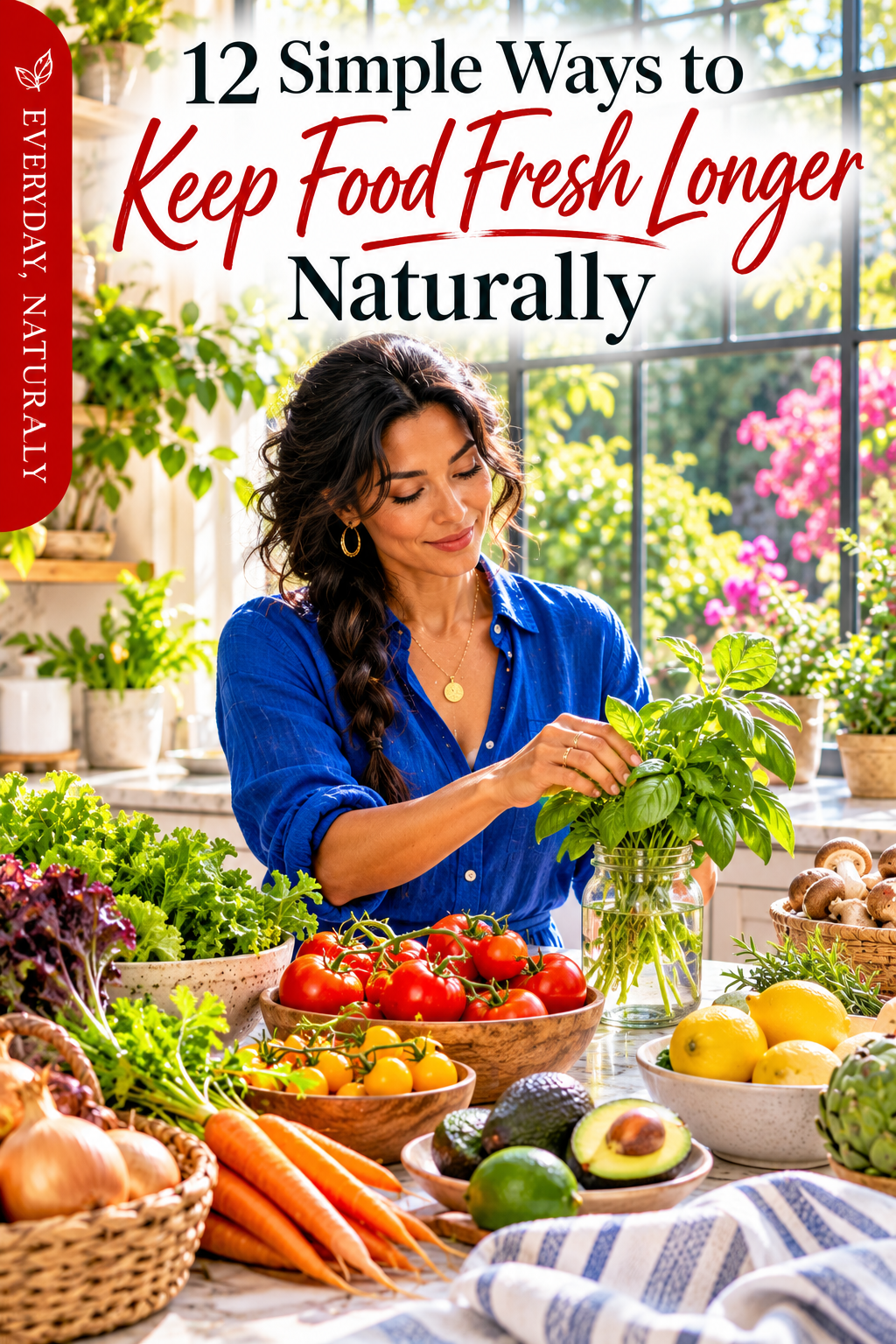
There's something wonderful about bringing home beautiful, fresh produce.
Crisp leafy greens. Fragrant herbs. Perfectly ripe avocados. Colorful tomatoes. Freshly baked bread.
But there's nothing particularly wonderful about discovering that half of it has spoiled before you've had a chance to enjoy it.
The good news? Keeping food fresh longer often comes down to knowing what each food actually needs.
Some foods prefer cool temperatures. Others need airflow. Some benefit from moisture, while others spoil more quickly when they're exposed to it.
And many of the best storage solutions are surprisingly simple.
No expensive gadgets. No complicated preservation products. Just a little everyday know-how.
Here are twelve natural ways to help your food stay fresh longer.
1. Treat Fresh Herbs Like Flowers
Fresh parsley and cilantro can wilt surprisingly quickly when left in their original packaging.
Try this instead:
Trim the ends of the stems and place the herbs upright in a clean glass jar with a small amount of fresh water, much like a bouquet of flowers.
Loosely cover the leaves with a clean bag if desired and refrigerate. Change the water when it becomes cloudy.
This works particularly well for parsley and cilantro.
What about basil? Basil is sensitive to chilling, so short-term storage at room temperature, away from direct sunlight, is often preferable. Keep the stems in water and use it promptly.
The trick is understanding that not every herb prefers the same conditions.
2. Give Potatoes a Cool, Dark Place
Potatoes don't need an elaborate storage container.
They need the right environment.
Store them in a cool, dark, dry, well-ventilated place, such as a suitable pantry or storage area.
A breathable basket, paper bag, or ventilated container can work well.
Avoid leaving potatoes in direct sunlight, which can encourage greening.
Also, avoid storing them in warm, humid spaces where they may sprout or spoil more quickly.
One important detail: Potatoes that have turned extensively green or developed significant sprouts should be evaluated carefully and discarded when unsafe. Cooking doesn't reliably eliminate the naturally occurring glycoalkaloids associated with greening.
For ordinary household storage, follow food-safety guidance on whether refrigeration is appropriate for your intended cooking method.
3. Let Whole Onions Breathe
Whole, unpeeled onions generally store best in a cool, dry, dark location with good airflow.
A mesh bag or ventilated basket is often better than a sealed plastic bag, which can trap moisture.
Keep them away from excessive heat and humidity.
Once an onion has been cut, however, the rules change.
Store cut onions in a covered container in the refrigerator and use them promptly.
A whole onion and a sliced onion have very different storage needs.
4. Keep Garlic Dry and Ventilated
Whole garlic bulbs prefer a dry, well-ventilated environment.
A small mesh basket or breathable container in a cool, dark pantry is usually a good choice.
Avoid sealing whole garlic bulbs in containers that trap moisture.
And here's an important safety distinction:
Never store homemade garlic-in-oil mixtures at room temperature.
Garlic stored in oil can create conditions that allow Clostridium botulinum to grow if handled improperly.
If you make garlic-infused oil at home, follow tested food-safety instructions for refrigeration and prompt use.
For everyday garlic storage, keeping whole bulbs dry and ventilated is wonderfully simple.
5. Let Avocados Ripen Before Refrigerating
A firm, unripe avocado generally does best at room temperature.
Once it reaches the ripeness you prefer, refrigeration can help slow further softening.
If you've cut an avocado, refrigerate the remaining portion promptly in a covered container.
A little lemon or lime juice on the exposed flesh may help slow browning, although it won't prevent spoilage.
Skip the viral water-storage trick. Storing whole avocados submerged in water isn't recommended as a food-safety method.
The better approach is simply to let them ripen naturally and refrigerate when ready.
6. Manage Moisture Around Leafy Greens
Leafy greens need moisture to stay crisp—but too much standing water encourages deterioration.
After washing, dry greens thoroughly using a salad spinner or clean towel.
Store them in a clean refrigerator container lined with a dry paper towel or clean absorbent cloth.
The towel helps manage excess moisture.
Replace it if it becomes saturated.
For packaged greens labeled prewashed or ready to eat, follow the package instructions rather than automatically washing them again.
The goal is moisture balance, not completely drying out the leaves.
7. Keep Carrots and Celery Crisp With Cold Water
Here's a useful little trick for vegetables that tend to become limp.
Peeled or cut carrots and celery can be stored submerged in clean, cold water in a covered container in the refrigerator for short-term use.
Change the water regularly, keep everything refrigerated, and use the vegetables promptly.
This can help maintain crispness by limiting moisture loss.
It's especially useful for vegetables you've already prepared for snacks or cooking.
However, don't use water storage as a way to rescue vegetables that have become slimy, moldy, or otherwise spoiled.
8. Know When Tomatoes Belong in the Refrigerator
Tomatoes are a wonderful example of how storage affects both flavor and freshness.
Unripe tomatoes generally benefit from room-temperature storage while they finish ripening.
Once fully ripe, refrigeration can help slow deterioration if you aren't going to eat them immediately.
For the best flavor and texture, allow a refrigerated whole tomato to return toward room temperature before serving.
Cut tomatoes, however, should be refrigerated promptly.
The simple rule: Ripen first. Refrigerate when needed.
9. Freeze Fresh Ginger Before It Goes to Waste
Fresh ginger can dry out or develop mold when forgotten in the refrigerator.
One practical solution is freezing it.
Wash and dry the ginger, then place it in a suitable freezer-safe container or wrap.
You can grate or slice frozen ginger directly into many recipes without thawing the entire piece.
Freezing may change its texture, but it's particularly useful for ginger intended for cooking, tea, or simmering.
This is a great example of using your freezer to prevent unnecessary food waste.
10. Give Mushrooms Breathable Packaging
Fresh mushrooms contain a lot of moisture.
When stored in tightly sealed plastic packaging, condensation can accumulate and contribute to sliminess.
A paper bag in the refrigerator can provide a more breathable storage option for many fresh mushrooms.
Keep them chilled and avoid washing until you're ready to use them, unless the product instructions say otherwise.
If mushrooms develop mold, significant slime, or an unpleasant odor, discard them.
Sometimes a simple paper bag works better than an elaborate storage container.
11. Freeze Bread Instead of Refrigerating It
Bread is one of those foods that can go stale before you've finished the loaf.
But refrigeration isn't usually the best answer for maintaining its texture.
Cold refrigerator temperatures can accelerate starch retrogradation, one of the processes responsible for bread becoming stale.
For bread you plan to eat soon, appropriate room-temperature storage may be preferable.
For longer storage, freeze it.
Slice the bread before freezing so you can remove only what you need.
Then toast or thaw individual slices as desired.
Freezing won't improve bread that's already stale, but it can help preserve the quality of fresh bread for later use.
12. Refrigerate Citrus for Longer Storage
Lemons, limes, oranges, and other citrus fruits can look beautiful displayed in a bowl on the kitchen counter.
And if you're planning to use them soon, that's perfectly reasonable.
But for longer storage, refrigeration can help slow moisture loss and deterioration.
Keep citrus in the refrigerator's produce drawer or another appropriate storage area.
Wash the fruit under running water before cutting or peeling, even if you don't intend to eat the peel.
That helps reduce the chance of transferring contaminants from the outside to the edible portion.
The Little Secret to Less Food Waste
The best way to keep food fresh longer isn't a single magical storage trick.
It's recognizing that different foods have different needs.
Some like moisture.
Some need to stay dry.
Some benefit from airflow.
Others last longer when chilled or frozen.
And sometimes the most useful solution is something you already have—a glass jar, a clean towel, a paper bag, or a little space in the freezer.
You don't need an expensive kitchen storage system to make better choices.
A little knowledge can save a surprising amount of food.
And that's a wonderfully practical way to live a little more naturally.
Explore Further
For additional guidance on safe food handling, produce storage, and reducing food waste:
