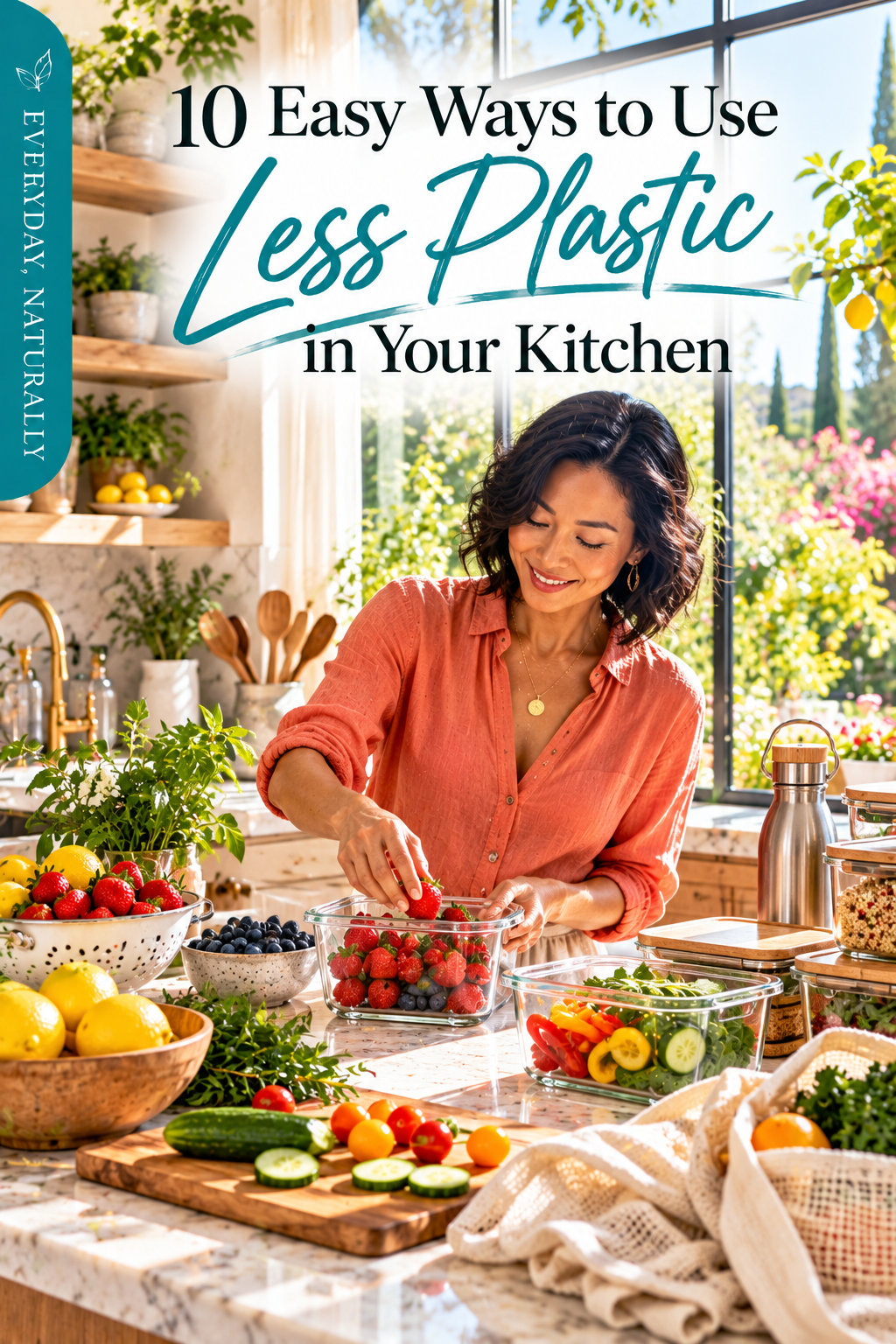
Take a look around your kitchen.
Plastic food containers. Cutting boards. Cooking utensils. Water bottles. Produce bags. Plastic wrap. Packaging. Storage bags.
It's remarkable how much plastic has quietly become part of our everyday routines.
And while plastic certainly has its conveniences, many of us are beginning to reconsider how much of it we actually need—especially when it comes to preparing, heating, and storing our food.
The good news?
Creating a kitchen with less plastic doesn't require an expensive makeover or throwing away everything you already own.
In fact, some of the best changes happen gradually, as everyday items wear out and need replacing.
Here are ten practical ways to get started.
1. Choose Glass for Everyday Food Storage
One of the easiest places to begin is with the containers you reach for most often.
Glass storage containers are particularly useful for leftovers, prepared meals, sauces, chopped vegetables, and other refrigerated foods.
Unlike plastic, glass doesn't contain plastic additives that can migrate into food. It's also easy to clean, doesn't readily retain food odors, and allows you to see what's inside.
Try this: As older plastic containers become scratched, stained, or damaged, replace them with durable glass containers.
Choose a few practical sizes rather than purchasing an enormous matching collection.
And remember to check the manufacturer's instructions before putting glass containers in the oven, microwave, or freezer.
2. Stop Heating Food in Ordinary Plastic Containers
This is one habit worth reconsidering.
Heat, repeated use, and the type and condition of a plastic container can influence the migration of substances from food-contact materials into food.
Not every plastic container presents the same risks, and products intended for microwave use must meet applicable food-contact safety requirements.
Still, if you'd prefer to reduce unnecessary contact between hot food and plastic, there's a simple solution.
Transfer leftovers to microwave-safe glass or ceramic before reheating.
It's an easy habit that doesn't require changing what you cook or how you eat.
3. Rethink Your Cutting Boards
Plastic cutting boards are common because they're lightweight, inexpensive, and easy to clean.
But they're not the only option.
A well-made wooden cutting board can be a beautiful, durable addition to your kitchen. With proper care, it can last for years.
Wood does require attention, however. It should be cleaned appropriately, dried thoroughly, and never left soaking in water.
Both wood and plastic cutting boards can develop grooves that make cleaning more difficult. Replace boards that become excessively worn or difficult to sanitize.
A practical approach: Consider a quality wooden board for everyday produce preparation while maintaining a separate, easily sanitized board for raw meat, poultry, and seafood.
Whatever material you choose, preventing cross-contamination matters more than achieving a completely plastic-free kitchen.
4. Replace Plastic Cooking Utensils as They Wear Out
Spatulas, stirring spoons, ladles, and serving utensils are another easy place to make gradual changes.
Wooden spoons are wonderful for stirring sauces and sautéing vegetables.
Stainless steel utensils are durable and particularly useful with compatible cookware.
Food-grade silicone can also be a practical alternative for nonstick surfaces, although silicone is a synthetic material rather than a completely natural one.
The important consideration is matching the utensil to the cooking task.
Try this: The next time a plastic spatula becomes warped, melted, cracked, or excessively worn, replace it with a suitable wood, stainless steel, or heat-rated silicone alternative.
There's no need to replace an entire drawer at once.
5. Find Alternatives to Plastic Wrap
Plastic wrap is convenient, but it's surprisingly easy to reduce how often you need it.
A plate placed over a bowl can cover leftovers in the refrigerator.
Glass containers with fitted lids work beautifully for prepared foods.
Reusable silicone lids can fit certain bowls and containers.
And a clean, appropriately sized storage container often eliminates the need for wrap altogether.
For foods that require airtight storage, choose a suitable container with a secure lid.
The little trick: Before reaching for plastic wrap, ask whether something you already own can do the same job.
Often, it can.
6. Store Acidic Foods in Glass
Tomato sauce, citrus-based dressings, pickled vegetables, and other acidic foods are excellent candidates for glass storage.
The acidity of food is one factor that can affect how substances migrate from certain food-contact materials, although the actual amount depends on the material, temperature, contact time, and other conditions.
Glass is a useful choice because it doesn't contain the plastic additives associated with some polymer-based containers.
It also resists staining and lingering odors from strongly flavored foods.
Try this: Save a few suitable glass food jars for refrigerated leftovers or homemade dressings.
Wash them thoroughly, inspect them for damage, and use them for refrigerator storage rather than assuming ordinary reused jars are safe for home canning.
7. Make Reusable Produce Bags Part of Your Routine
Those thin plastic produce bags at the grocery store can accumulate quickly.
Fortunately, many fruits and vegetables don't need an individual plastic bag at all.
For items that do benefit from containment, lightweight washable mesh bags are a convenient alternative.
Keep several in your reusable shopping bags so they're ready when you need them.
And don't forget that storage needs vary.
Leafy greens, mushrooms, berries, and herbs all have different moisture and airflow requirements. Reusable bags aren't automatically the best storage solution for every type of produce.
The goal is less unnecessary packaging—not shorter food freshness.
8. Choose a Reusable Water Bottle You'll Actually Use
Single-use plastic water bottles are an easy source of household waste to reduce.
A durable stainless steel or glass water bottle can be a practical alternative.
Stainless steel is especially convenient for travel, outdoor activities, and everyday errands because it resists breakage.
Glass is lovely for home or office use, particularly when paired with a protective sleeve.
Choose something that's comfortable to carry, easy to clean, and appropriate for your routine.
A reusable bottle only becomes useful when you actually use it.
9. Pay Attention to Plastic That's Showing Its Age
Not every plastic item needs to be discarded simply because it's plastic.
But wear and damage matter.
Containers that are cracked, warped, deeply scratched, or no longer intended for the way they're being used deserve a closer look.
Damaged food-contact surfaces can become more difficult to clean, and deterioration may affect their suitability for continued use.
Avoid using disposable food packaging for repeated heating or storage unless the manufacturer specifically indicates that it's appropriate.
A good habit: Periodically inspect the food containers and utensils you use most often.
Replace items based on their condition and intended use—not simply because they're made from plastic.
10. Buy Less, Reuse More, and Replace Thoughtfully
Perhaps the most important change isn't about purchasing something new.
It's about changing how we think about what we already have.
A glass jar can become a pantry container.
A ceramic bowl can hold leftovers.
A durable stainless steel bottle can replace hundreds of disposable water bottles over its lifetime.
A quality wooden spoon may serve your kitchen for years.
But purchasing a dozen new products to replace perfectly functional items isn't necessarily the most environmentally responsible choice.
Reducing waste also means avoiding unnecessary consumption.
Start with the habits that matter most to you, particularly frequent food heating, storage, and disposable packaging.
Then make changes as opportunities arise.
What About Microplastics?
Microplastics are tiny plastic particles that have been detected in food, drinking water, and the environment.
Scientists are actively studying how people are exposed to them and what those exposures may mean for long-term health.
Research has identified potential biological concerns, but important questions remain about actual exposure levels, differences among particles, and the extent of health risks from everyday dietary exposure.
It's reasonable to reduce unnecessary plastic use while recognizing that not every claim about microplastics and human health has been conclusively established.
You don't need to be frightened of everything in your kitchen to make thoughtful improvements.
A More Natural Kitchen, One Choice at a Time
A healthier kitchen doesn't have to be perfectly plastic-free.
It doesn't require matching glass containers, expensive storage systems, or replacing everything you own.
Sometimes it begins with something as simple as reheating lunch in a glass bowl.
Choosing a wooden spoon when your old spatula wears out.
Taking a reusable bag to the grocery store.
Or realizing that the glass jar you were about to recycle could have another useful life.
Small changes become everyday habits.
And everyday habits can gradually change the way we live.
