A Botanical DIY Treatment for a Nourished Scalp & Beautifully Conditioned Hair
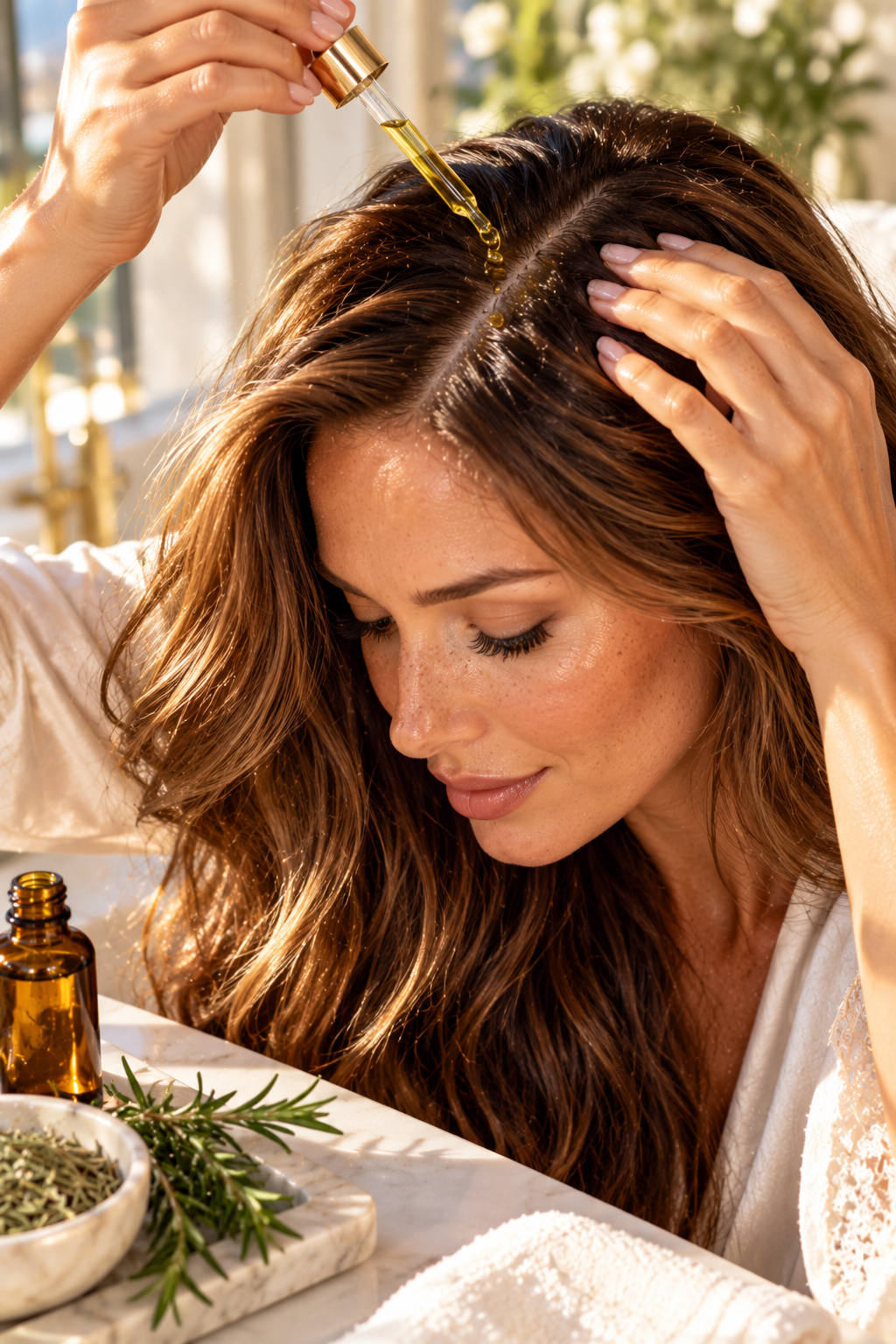
Beautiful hair care begins with a little attention to the scalp.
Between styling products, frequent washing, environmental exposure, and everyday routines, the scalp can easily become an overlooked part of our beauty care.
A rosemary-infused scalp oil offers a simple way to bring a little botanical nourishment into your hair care routine.
Made with dried rosemary and natural plant oils, this pre-shampoo treatment combines gentle scalp massage with conditioning ingredients to leave hair feeling softer and more manageable.
And the best part? You can make it yourself.
Why Rosemary?
Rosemary has been used in traditional beauty and grooming practices for generations.
Its aromatic leaves contain naturally occurring plant compounds, including rosmarinic acid and other antioxidants.
Rosemary has also attracted attention for its potential role in hair care. A small clinical study examined rosemary oil in people experiencing androgenetic alopecia, although research remains limited.
It's important to distinguish between concentrated rosemary essential oil, which has been studied in some hair-loss research, and homemade rosemary-infused carrier oil. They are different preparations, and the findings cannot automatically be applied to a DIY infusion.
For this ritual, we're focusing on something simpler: conditioning the scalp, caring for the hair, and enjoying a natural botanical treatment.
🌿 DIY Rosemary-Infused Scalp Oil
This gentle, aromatic blend uses dried rosemary infused into nourishing plant oils.
You'll Need
2 tablespoons dried organic rosemary leaves
½ cup organic jojoba oil
¼ cup organic sweet almond oil
A clean, completely dry glass jar
Fine-mesh strainer or cheesecloth
A clean amber glass bottle for storage
How to Make It
1. Prepare the rosemary
Place the dried rosemary leaves into a clean, completely dry glass jar.
Use fully dried rosemary rather than fresh sprigs. Moisture introduced into homemade oil infusions can encourage spoilage.
2. Add your oils
Pour the jojoba and sweet almond oils over the rosemary, making sure the leaves are completely submerged.
3. Gently warm the infusion
Place the jar in a saucepan containing a few inches of warm water, using a rack or folded cloth to keep the glass off the bottom of the pan.
Maintain gentle heat for approximately 1–2 hours, without allowing the oil to boil or overheat.
Alternatively, leave the sealed jar in a cool, dark location for approximately 2–3 weeks, gently turning it occasionally.
4. Strain thoroughly
Once the oil has cooled, strain through fine cheesecloth or a coffee filter to remove the rosemary leaves and any visible particles.
5. Bottle your botanical oil
Transfer the strained oil into a clean, completely dry amber glass bottle.
Label it with the preparation date and store away from direct sunlight and heat.
Because homemade infusions aren't tested for stability, prepare small batches, use clean and dry utensils, and discard the oil if its smell, color, or appearance changes unexpectedly.
NOTE: Always skin test products on a small area first.
How to Perform the Rosemary Scalp Oil Ritual
1. Begin With Dry Hair
Before washing your hair, gently brush through any tangles.
Divide your hair into several sections so you can easily reach the scalp.
2. Apply the Botanical Oil
Using a clean dropper or your fingertips, apply a small amount of rosemary-infused oil along each section.
You don't need to saturate your scalp.
A little goes a long way.
3. Massage Gently
Using the pads of your fingertips—not your nails—massage the oil into your scalp using small, circular movements.
Begin near the hairline and work toward the crown and back of your head.
Continue for approximately 3–5 minutes.
The goal is gentle, comfortable massage rather than vigorous rubbing.
4. Let the Oil Rest
Leave the oil on your scalp for approximately 20–30 minutes.
If your hair feels dry through the lengths, you can smooth a small amount of the oil over the ends as well.
Wrap your hair loosely in a soft towel or use a shower cap while you wait.
5. Shampoo & Rinse
Wash your hair thoroughly with a gentle shampoo.
Depending on your hair type and how much oil you used, a second light shampoo may be necessary.
Follow with conditioner if desired.
Style as usual and enjoy the soft, conditioned feel of your hair.
How Often Should You Use It?
For most people who tolerate scalp oils, once a week is a reasonable starting point.
Those with very dry hair may enjoy an occasional additional treatment, while people with naturally oily scalps may prefer less frequent application.
If your scalp is prone to dandruff, seborrheic dermatitis, folliculitis, or irritation, applying oils directly to the scalp may worsen symptoms. In those cases, it's best to check with a dermatologist before trying this treatment.
Always patch-test new ingredients, particularly if you have sensitive skin or a history of botanical or nut allergies.
Make It a Ritual
There's something lovely about preparing a beauty treatment from simple botanical ingredients.
The delicate fragrance of rosemary.
The warmth of the oil between your fingertips.
The gentle movements of a scalp massage.
And the satisfaction of caring for your hair with something you made yourself.
Keep your rosemary oil in a beautiful amber bottle alongside your favorite hair-care essentials.
Set aside a little time before your weekly hair wash.
Apply.
Massage.
Let it rest.
Then wash and enjoy.
Sometimes a little extra care is all an ordinary routine needs to feel special.
A Final Reflection
Beautiful hair care doesn't have to involve an elaborate collection of products.
Sometimes it begins with a handful of dried herbs, a few nourishing oils, and the willingness to give yourself a little extra attention.
Small rituals, done consistently, create lasting change.
