
From magnificent Baroque halls and centuries-old literary treasures to breathtaking modern architecture, discover six extraordinary libraries where books, beauty, and imagination come together.
Imagine walking through an enormous doorway and discovering a room so magnificent that, for a moment, you forget why you entered.
Books rise toward the ceiling in beautifully carved wooden shelves. Golden details shimmer in the sunlight. An extraordinary painted ceiling stretches overhead, while elegant staircases seem to invite you into another century.
You might expect to find such a room inside a palace.
Instead, you've entered a library.
Across the world, some of the most remarkable architectural treasures were created to house something equally extraordinary: the accumulated knowledge, stories, ideas, and imagination of generations.
And while libraries are traditionally associated with reading and research, some have become unforgettable destinations in their own right.
There are libraries that resemble grand European palaces, others that feel like magnificent cathedrals of books, and a few that seem to have stepped directly out of the future.
Some are centuries old.
Others are surprisingly modern.
But each offers something fascinating beyond the books themselves.
Here are six extraordinary libraries worth discovering.
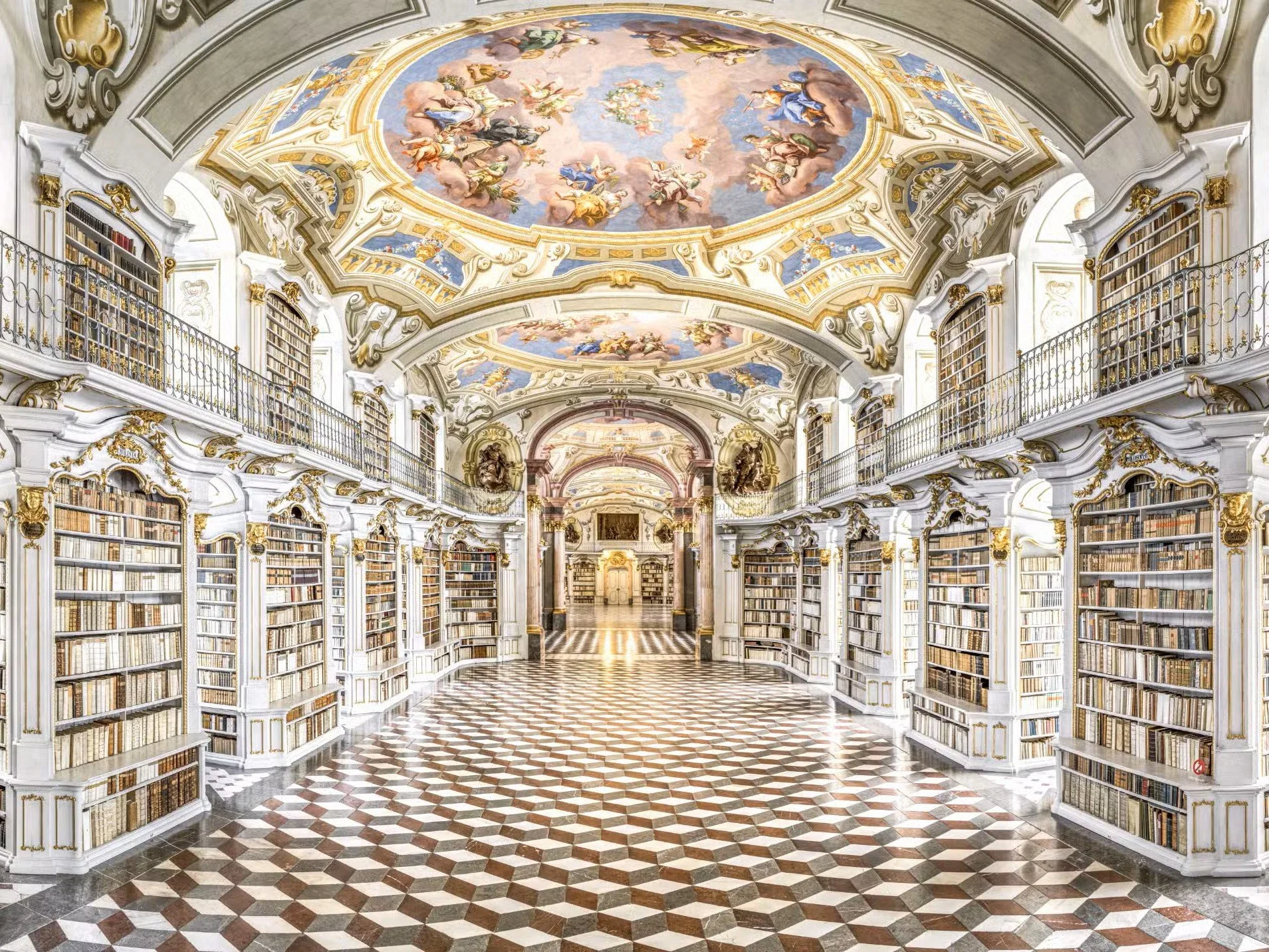
Admont Abbey Library
1. Admont Abbey Library — Austria
A Baroque Masterpiece Filled with Light
Imagine entering a magnificent hall where white bookshelves rise beneath an extraordinary ceiling painted with elaborate frescoes.
Gold accents shimmer throughout the room. Sculptures stand among the towering shelves, and sunlight pours through enormous windows.
The effect is breathtaking.
Located within a Benedictine monastery in the Austrian town of Admont, the Admont Abbey Library is celebrated as the world's largest monastic library hall.
Completed in 1776, the room stretches approximately 70 meters in length and houses around 60,000 visible volumes.
But its extraordinary beauty is about more than size.
Architect Josef Hueber designed the space with a remarkable emphasis on light, creating a room that feels expansive, elegant, and surprisingly luminous.
The seven ceiling frescoes, painted by Bartolomeo Altomonte, explore the development of human knowledge.
Sculptures, architectural details, and carefully arranged collections contribute to a remarkable harmony between art and scholarship.
There is something fascinating about the intention behind such a magnificent space.
This was not simply somewhere to store books.
It was designed to celebrate the pursuit of knowledge itself.
What makes it extraordinary: Brilliant white-and-gold Baroque architecture, magnificent ceiling frescoes, elaborate sculptures, and one of the most breathtaking historic library interiors in the world.
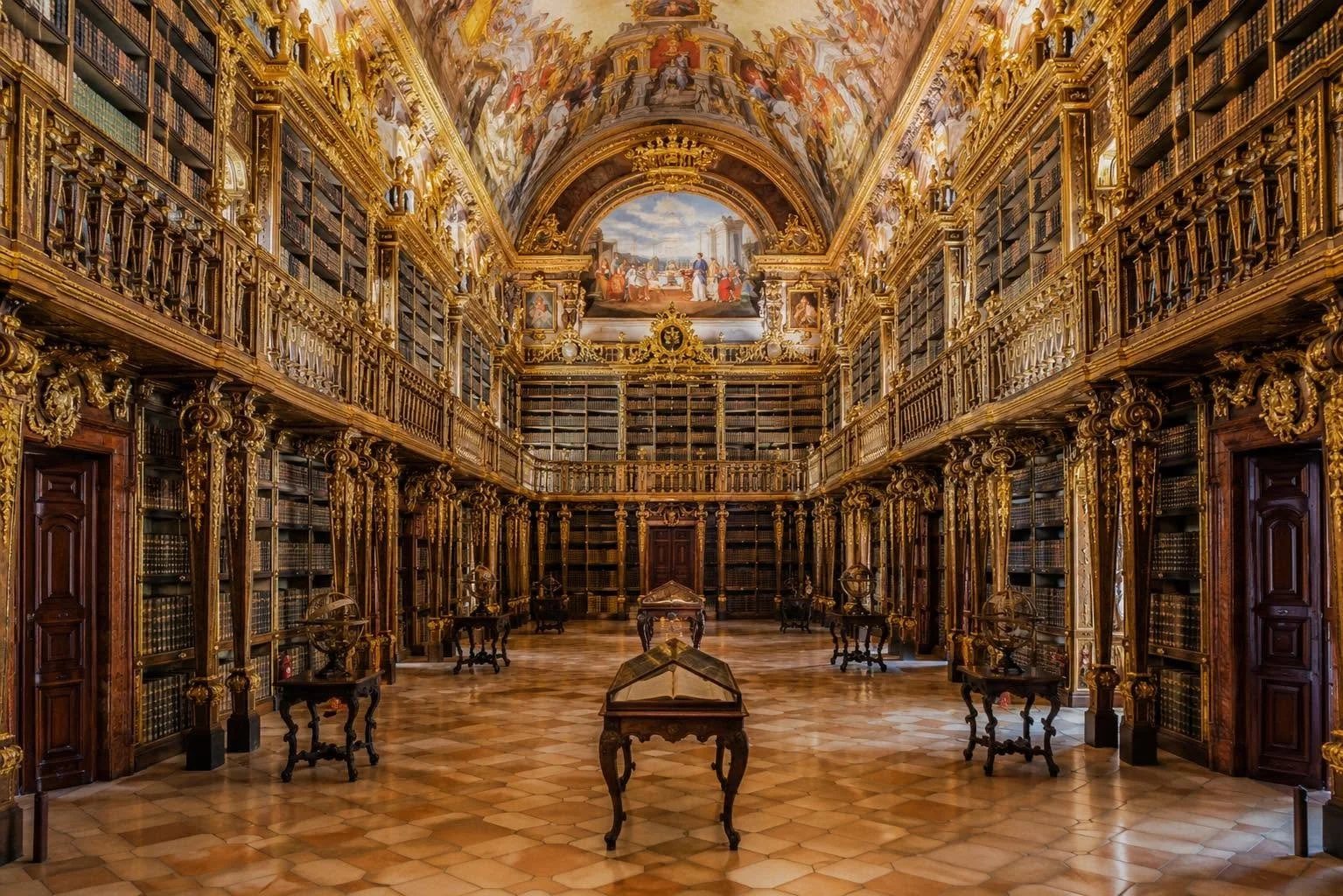
Biblioteca Joanina
2. Biblioteca Joanina — Coimbra, Portugal
A Library That Feels Like a Royal Palace
If Admont Abbey Library is a celebration of light, Biblioteca Joanina offers a different kind of magnificence.
Located at the historic University of Coimbra in Portugal, this extraordinary library is filled with rich colors, dark wooden bookshelves, elaborate gilded carvings, and beautifully painted ceilings.
Construction was completed in 1728 during the reign of King John V.
Its three magnificent rooms feature ornate bookshelves decorated in black, red, and green, each accented with intricate gold details.
The result feels almost theatrical.
Every surface seems to reveal another extraordinary detail.
There are decorative arches, painted ceilings, elaborate carvings, and rows of beautifully preserved historic books.
And then there is one particularly unusual aspect of the library's history.
A small colony of bats has traditionally helped protect the books by feeding on insects that might otherwise damage the collection.
It's a fascinating reminder that even the most magnificent architectural spaces can have unexpected stories hidden within them.
The library houses important historic works, including books dating from the 16th through the 18th centuries.
But for visitors, part of the attraction is simply standing inside such an extraordinary room.
Biblioteca Joanina is a beautiful example of a time when architecture, craftsmanship, and books were brought together with astonishing attention to detail.
What makes it extraordinary: Rich Baroque interiors, magnificent gilded bookshelves, extraordinary craftsmanship, and an unusual connection between historic book preservation and nature.
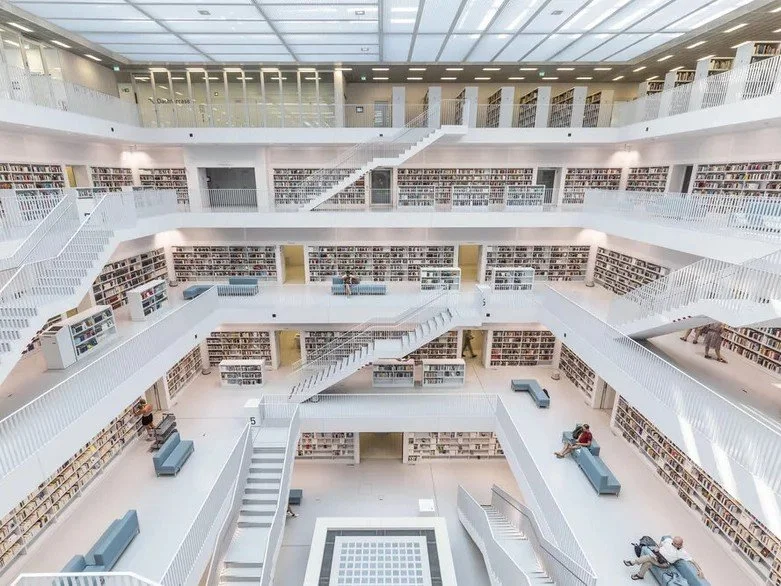
Stuttgart City Library
3. Stuttgart City Library — Germany
A Modern Architectural Wonder
Now imagine something completely different.
Instead of ornate ceilings, carved wood, and centuries-old decoration, picture an enormous white interior filled with geometric lines, open staircases, and beautifully arranged books.
The architecture feels almost futuristic.
Welcome to Stuttgart City Library.
Opened in 2011, this remarkable German library was designed by architect Eun Young Yi.
From the outside, the building appears as a simple geometric cube.
But step inside, and an extraordinary world opens up.
Its most recognizable feature is a magnificent multilevel atrium surrounded by white bookshelves and interconnected staircases.
The books themselves provide much of the color.
Against the brilliant white architecture, their spines create beautiful ribbons of color across the different levels.
Sunlight enters through the glass roof, illuminating the space and emphasizing its extraordinary geometry.
There is something wonderfully unexpected about this library.
It demonstrates that architectural beauty doesn't always require elaborate ornamentation.
Sometimes simplicity, proportion, light, and repetition can create something equally spectacular.
And unlike many historic libraries that function primarily as cultural attractions, Stuttgart City Library remains an active public library.
It's a place where extraordinary architecture is part of everyday life.
What makes it extraordinary: Brilliant white minimalist architecture, dramatic geometric staircases, a luminous multilevel atrium, and a modern approach to creating a beautiful public space.
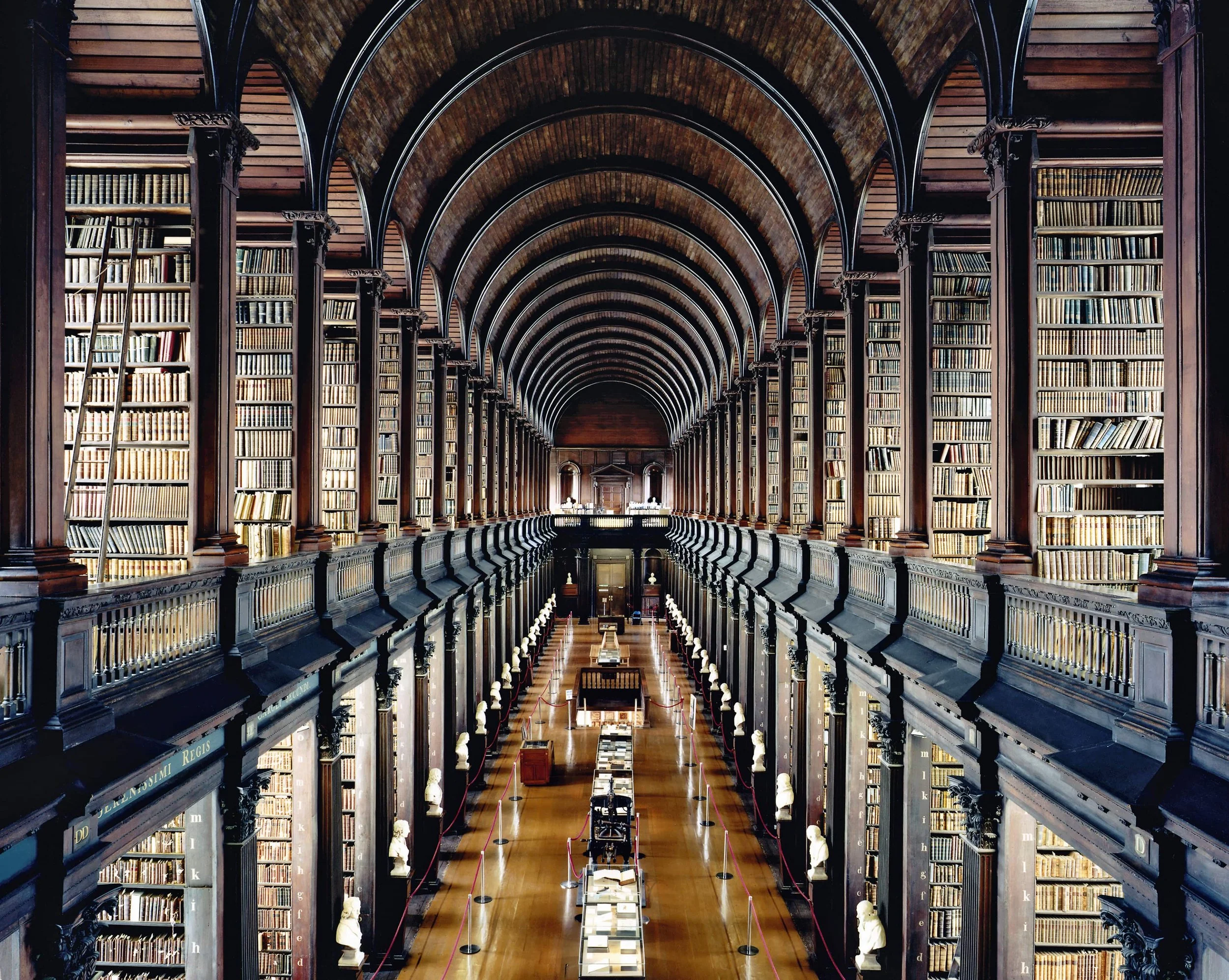
The Old Library at Trinity College—Dublin, Ireland
4. The Old Library at Trinity College — Dublin, Ireland
A Magnificent Hall of History and Stories
There are certain places that seem to carry centuries of stories within their walls.
The Old Library at Trinity College Dublin is one of them.
Its magnificent Long Room is among Ireland's most recognizable historic interiors.
Imagine an extraordinary hall stretching into the distance beneath a soaring wooden barrel-vaulted ceiling.
Tall oak bookcases line the walls, while marble busts of notable figures add to the room's historic atmosphere.
The library is closely associated with one of Ireland's most celebrated cultural treasures: the Book of Kells, an illuminated manuscript created more than a thousand years ago.
The Old Library itself dates from the 18th century and has become an important symbol of Ireland's literary and scholarly heritage.
But this magnificent building is also entering a new chapter.
A major conservation and redevelopment project is underway to protect the historic structure and its collections for future generations.
As part of that work, many of the books have been temporarily removed from the Long Room for cleaning and conservation.
This means the experience visitors encounter today may look different from the familiar photographs showing every shelf filled with books.
Yet there is something meaningful about that transformation.
The careful preservation of these treasures is part of the continuing story of the library itself.
And even during this period of change, the extraordinary architecture remains a powerful reminder of the value placed on knowledge across generations.
What makes it extraordinary: Magnificent historic architecture, centuries of scholarly heritage, the celebrated Book of Kells, and the remarkable preservation of one of Ireland's cultural landmarks.
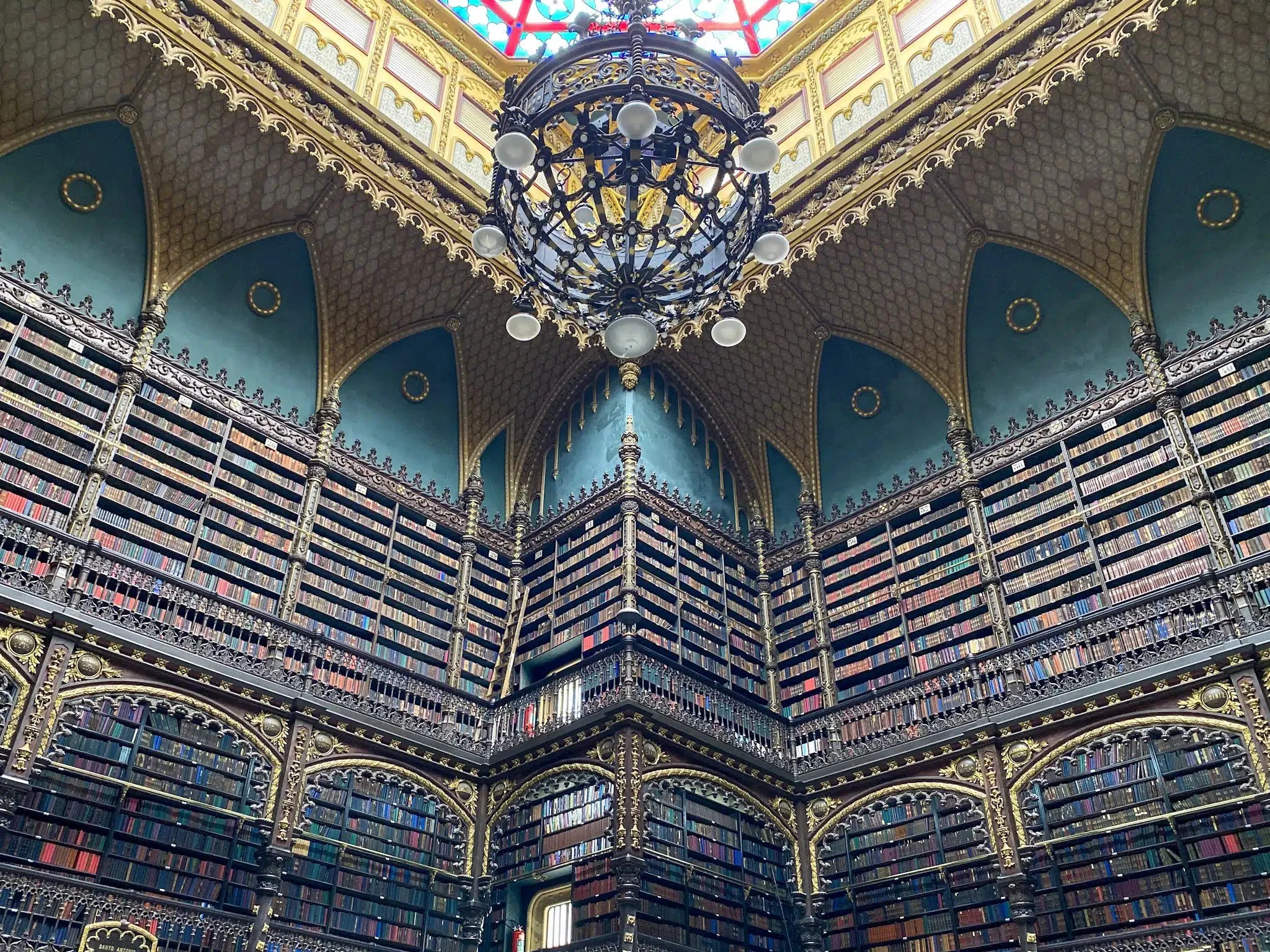
Real Gabinete Portugues de Leitura
5. Real Gabinete Português de Leitura — Rio de Janeiro, Brazil
A Literary Treasure Hidden in the City
Imagine walking through the busy streets of Rio de Janeiro and discovering a building that seems to belong to another world.
Its beautiful stone façade offers a hint of what lies inside.
But nothing quite prepares you for the reading room.
Towering wooden bookshelves rise several stories toward an extraordinary ceiling. Intricate architectural details frame the collections, while a magnificent stained-glass skylight illuminates the space.
The atmosphere feels almost like a grand European literary palace.
The Real Gabinete Português de Leitura was founded in 1837 by Portuguese immigrants who wanted to preserve and celebrate their literary and cultural heritage.
Its present building opened in 1887.
Designed in the Neo-Manueline architectural style, it draws inspiration from Portugal's richly decorated historic architecture.
The result is extraordinary.
The library combines elaborate woodwork, historic books, beautiful architectural details, and an almost theatrical sense of height.
There is something particularly fascinating about finding such a space in the heart of a bustling modern city.
Beyond the doors, everyday life continues.
Inside, visitors discover a remarkable world devoted to literature, history, and cultural identity.
It's a beautiful reminder that extraordinary destinations are not always found in the places we expect.
What makes it extraordinary: Spectacular Neo-Manueline architecture, towering wooden bookshelves, a beautiful stained-glass ceiling, and a remarkable connection between Brazilian and Portuguese cultural history.
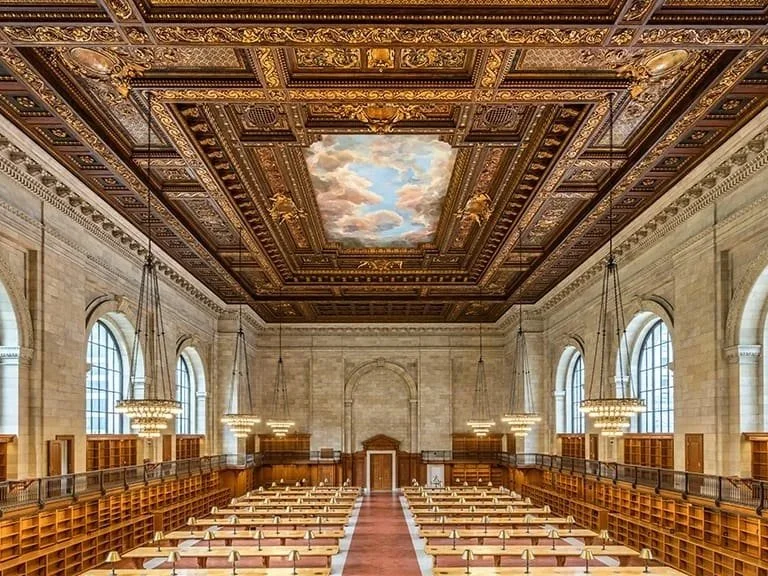
The New York Public Library
6. The New York Public Library — New York, United States
A Grand Reading Room Above the City
In the heart of Manhattan, surrounded by the movement and energy of New York City, stands one of America's most celebrated libraries.
The New York Public Library's Stephen A. Schwarzman Building is a magnificent Beaux-Arts landmark.
But one of its most extraordinary treasures is found inside.
The Rose Main Reading Room stretches nearly the length of two city blocks.
Elegant wooden tables extend across the enormous hall, illuminated by beautiful lamps and chandeliers.
High above, a painted ceiling depicts soft clouds drifting across a luminous sky.
The effect is both grand and surprisingly inviting.
There is something wonderful about a space so magnificent being devoted to reading, research, and discovery.
Unlike the more intimate atmosphere of a small neighborhood library, the Rose Main Reading Room offers a sense of scale and occasion.
Yet its purpose remains wonderfully familiar.
People come here to read, study, explore ideas, and spend time with books.
The library's beautiful architecture transforms those everyday activities into something memorable.
And perhaps that is what makes it especially appealing.
In one of the busiest cities in the world, an extraordinary room has been created for the quiet pursuit of knowledge.
What makes it extraordinary: Magnificent Beaux-Arts architecture, soaring painted ceilings, elegant chandeliers, and one of the most spectacular reading rooms in the United States.
Six Libraries, Six Different Expressions of Beauty
What makes these libraries so fascinating is how differently they express the same underlying idea.
At Admont Abbey, knowledge is celebrated through light, art, and Baroque grandeur.
At Biblioteca Joanina, magnificent craftsmanship transforms bookshelves into works of art.
At Stuttgart, modern architecture creates beauty through simplicity and geometry.
At Trinity College Dublin, history and scholarship are woven into the fabric of an extraordinary building.
In Rio de Janeiro, a magnificent reading room preserves a rich literary and cultural connection.
And in New York, a grand public library offers a beautiful space for discovery in the heart of a bustling city.
Each represents a different time, culture, and architectural imagination.
Yet all share something remarkable.
They were created around the belief that books, ideas, and knowledge deserve a place of importance.
When the Building Becomes Part of the Experience
There is something especially interesting about visiting a beautiful library.
You may arrive because of its architecture.
Perhaps you've seen a photograph of an extraordinary ceiling or a magnificent room filled with books.
But once you're there, the experience can become about something more.
The quiet atmosphere.
The history.
The craftsmanship.
The realization that generations of readers have passed through the same space.
And the extraordinary number of stories, discoveries, and ideas preserved within its walls.
Even if you never open a book during your visit, you can still appreciate the imagination that went into creating such a place.
A library can be a work of art.
A historic landmark.
An architectural masterpiece.
And a beautiful destination worth exploring.
Perhaps the Most Beautiful Library Is the One That Surprises You
Not every memorable library needs a painted ceiling or elaborate gold decoration.
Some people are captivated by historic rooms filled with dark wood, old books, and centuries of history.
Others prefer modern spaces where sunlight, clean lines, and beautiful architecture create an entirely different atmosphere.
Perhaps you love the idea of an enormous reading room.
Or perhaps your favorite library would be a small, intimate space with a comfortable chair beside a window.
There is no single kind of library that everyone will find beautiful.
And perhaps that's part of the pleasure of discovering them.
Each reveals something about the people who imagined it, the culture that created it, and the experience it was designed to offer.
Some inspire wonder.
Others invite curiosity.
And a few make us wish we could simply stay a little longer.
If you could spend an afternoon inside any library in the world, which would you choose—and what would make it unforgettable for you?
Explore Further
Discover more about these extraordinary libraries through their official websites:
Before planning a visit, check each institution's official website for opening hours, visitor access, photography policies, and any restoration work or special exhibitions.
