You Haven’t Met All of Yourself Yet
Why your greatest capabilities may still be waiting to be discovered.

Fear & Dreams Series | CookieG by Design
What if there are parts of you that you haven't discovered yet?
Talents you haven't explored.
Strengths you haven't needed.
Interests you haven't pursued.
Abilities you haven't developed.
Entire experiences that could reveal something surprising about who you are.
We often think we know ourselves pretty well by a certain point in life. We know what we're good at, what we enjoy, what comes naturally, and what we've never been particularly talented at.
We begin describing ourselves in familiar ways.
I'm not creative.
I'm not athletic.
I'm terrible with technology.
I've never been good at speaking in front of people.
I'm just not that kind of person.
And somewhere along the way, those descriptions can quietly become boundaries.
But here's something worth considering:
How much of what you believe about yourself is based on what you've actually explored—and how much is based on what you've simply never tried?
Maybe you don't know yourself quite as completely as you think.
And maybe that's wonderful news.
The Difference Between Who You Are and Who You've Experienced
Most of us build our sense of identity from experience.
We look at what we've done, what we've accomplished, what we've struggled with, and what others have told us about ourselves.
Over time, those experiences form a familiar picture.
But experience is only a record of where you've been.
It isn't a complete inventory of what you're capable of becoming.
Imagine someone who has never picked up a paintbrush.
They may assume they aren't artistic, but what evidence do they really have?
Or someone who has never traveled alone, started a business, learned to dance, spoken to an audience, or tried a physically demanding activity.
They may believe those things aren't for them.
But perhaps they simply haven't had the opportunity to discover otherwise.
Not having done something isn't the same as being incapable of doing it.
That's an important distinction.
And one that can change the way we approach our own possibilities.
Familiarity Can Masquerade as Identity
There's comfort in knowing who we are.
We develop routines, preferences, strengths, and ways of moving through the world that feel natural.
And there's nothing wrong with that.
But sometimes we become so familiar with one version of ourselves that we stop imagining any others.
We keep doing what we're already good at.
Choosing what we already know.
Returning to what feels comfortable.
And gradually, our world can become organized around the person we've been rather than the person we might still become.
It's easy to confuse familiarity with certainty.
I've always been this way.
But have you?
Or have you simply been practicing this version of yourself for a very long time?
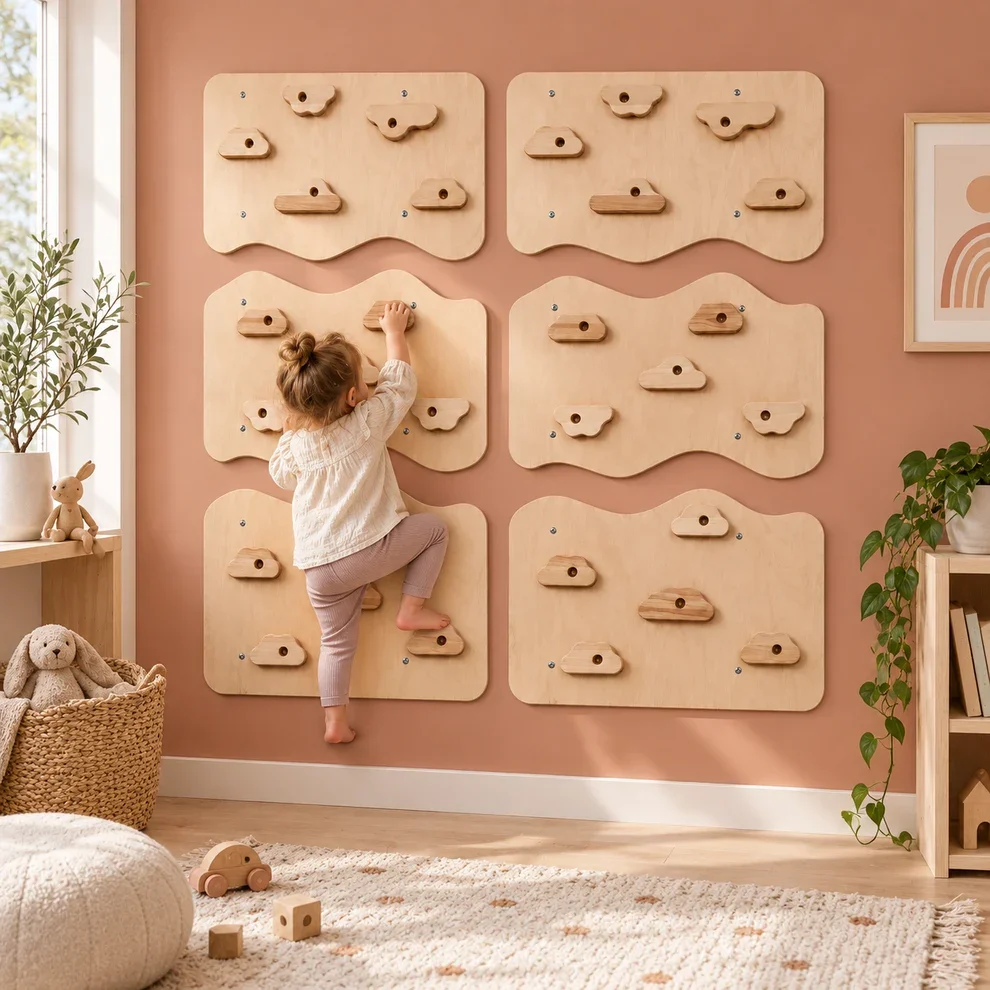
Indoor Play Gym of Natural Birch
You May Have Strengths That Life Hasn't Asked You to Use Yet
Some abilities don't reveal themselves until circumstances invite them forward.
You may not know how resourceful you are until you face a complicated problem.
How adaptable you are until your plans change.
How patient you can be until you begin learning something difficult.
How creative you are until you have to find an unconventional solution.
How capable you are of leading until someone needs you to step forward.
Think about the times life has surprised you.
Perhaps you handled something you once thought would overwhelm you.
Learned a skill you never imagined understanding.
Discovered that you enjoyed something you had previously dismissed.
Or found yourself doing something that an earlier version of you would never have believed possible.
Those moments reveal something important.
You don't always know what you're capable of until life gives you a reason to find out.
And sometimes, instead of waiting for life to create those opportunities, you can create them yourself.
The Danger of Deciding Too Early
We can make surprisingly permanent judgments about ourselves based on temporary experiences.
Maybe you tried something once and weren't very good at it.
Maybe someone criticized your effort.
Maybe you struggled with a subject in school.
Maybe you attempted something years ago and decided it simply wasn't your strength.
And that became the end of the story.
But one experience rarely tells us everything about our potential.
Perhaps you needed a different teacher.
A different approach.
More practice.
More time.
Or simply a different stage of life.
Being a beginner isn't evidence that you lack ability.
It's evidence that you're beginning.
And there's an enormous difference.
You Don't Have to Be Naturally Good at Something to Become Good at It
We tend to admire natural talent.
The person who seems effortlessly musical.
The athlete who makes movement look easy.
The writer who appears to find the perfect words without trying.
But natural ability is only one part of the picture.
Skills can be developed.
Confidence can grow.
Knowledge can be acquired.
Coordination can improve.
Creativity can be practiced.
And sometimes the people who become remarkably capable aren't the ones who began with the greatest talent.
They're the ones who remained curious enough to keep learning.
You may discover an unexpected natural ability.
Or you may discover something equally valuable:
You enjoy something enough to become good at it.
Both are worth celebrating.
The Fear of Being a Beginner Again
One reason we don't explore new parts of ourselves is that being a beginner can feel uncomfortable.
Especially when we've spent years becoming competent in other areas of life.
We're accustomed to knowing what we're doing.
To being capable.
To understanding the rules.
Then suddenly, we're learning something unfamiliar, making mistakes, asking questions, and perhaps feeling a little ridiculous.
It's tempting to retreat to the things we already do well.
But consider what happens when we avoid being beginners.
We also avoid discovering what else we might enjoy.
What we could learn.
Who we might meet.
And which unexpected abilities might emerge.
Sometimes the price of protecting our established identity is never discovering how much larger it could become.
You don't have to be impressive at something new. You just have to give yourself permission to explore it.
Curiosity Can Introduce You to a Different Version of Yourself
Not every discovery begins with a grand ambition.
Sometimes it begins with a simple thought.
That looks interesting.
Maybe you take a pottery class.
Try paddleboarding.
Learn photography.
Plant a garden.
Study a language.
Join a hiking group.
Experiment with writing.
Learn to use a new technology.
Volunteer for something outside your experience.
Or finally explore an interest you've been quietly carrying for years.
You don't need to know where it will lead.
You don't even need to be certain you'll enjoy it.
Curiosity is enough to begin.
And what you discover may have very little to do with the activity itself.
You might discover that you're more adventurous than you realized.
More patient.
More imaginative.
More comfortable meeting new people.
More willing to challenge yourself.
Or simply that you love learning something new.
Sometimes the activity is just the introduction.
The real discovery is you.
You Are Not Limited to One Version of Yourself
We often speak about identity as though it's something we uncover once and then carry unchanged through life.
But people evolve.
Interests change.
Priorities shift.
New experiences reveal new preferences.
Skills develop.
Confidence grows.
And the person who once felt completely certain about who they were may discover an entirely different side of themselves years later.
You can be practical and creative.
Independent and deeply connected.
Quiet and adventurous.
Disciplined and spontaneous.
You can love the life you've built while becoming curious about experiences you've never had.
You don't have to abandon one part of yourself to explore another.
There may be room for both.
What If You Stopped Saying “That's Not Me”?
Consider how often we close possibilities with that simple phrase.
That's not me.
Sometimes it's a perfectly accurate expression of preference.
You know what you enjoy, and something genuinely doesn't appeal to you.
But other times, it's an assumption disguised as self-knowledge.
The next time you catch yourself saying it, try asking:
How do I know?
Have I actually explored this?
Am I remembering an experience from years ago?
Am I afraid I won't be good at it?
Am I worried about what other people will think?
Or have I simply never imagined myself doing it?
You don't have to pursue every possibility.
But you can give yourself the freedom to reconsider a few.
And sometimes that small opening is enough to introduce you to something extraordinary.
Give Yourself a Chance to Surprise Yourself
Here's a simple invitation.
Think of one thing you've always assumed wasn't for you.
Not something dangerous or completely impractical.
Just something you've dismissed without much exploration.
Perhaps it's an activity, skill, experience, or interest.
Now imagine approaching it without any expectation of being good at it.
No pressure to master it.
No need to turn it into an accomplishment.
No requirement that it become part of your identity.
Just an opportunity to see what happens.
You might discover that you were right—it isn't for you.
That's useful information.
But you might discover something entirely different.
Something you enjoy.
Something you're surprisingly capable of learning.
Something that makes you feel more engaged, alive, or curious.
And perhaps you'll begin wondering what else you haven't tried.
The Beautiful Possibility of Not Knowing Everything About Yourself
There's something wonderfully freeing about realizing that self-discovery doesn't have an expiration date.
You don't have to have explored every interest by thirty.
Developed every talent by forty.
Discovered every strength by fifty.
Or settled permanently into one version of yourself at sixty, seventy, or beyond.
As long as you're willing and able to explore, there may be new things to learn about yourself.
Not because the person you are today is incomplete.
But because being human includes the capacity to change, adapt, learn, and discover.
You can appreciate who you've become without assuming you've reached the end of your possibilities.
And perhaps one of the most exciting questions you can ask yourself isn't:
Who am I?
But:
Who else might I discover I can be?
Closing Perspective
You have a lifetime of experiences behind you.
They've shaped your strengths, preferences, confidence, and understanding of yourself.
But they haven't necessarily revealed everything.
There may still be talents you haven't explored.
Interests waiting to capture your imagination.
Strengths that haven't been called upon.
Experiences that will surprise you.
And versions of yourself you haven't had the opportunity to meet.
So stay curious.
Try something unfamiliar.
Allow yourself to be a beginner.
Question the occasional assumption about what you can and cannot do.
Not because you need to become someone else.
But because there may be more to the person you already are than you've had the chance to discover.
You haven't met all of yourself yet.
And isn't that an exciting thought?
With Warmth & Kindness,
Tamara
Fun Ride, Fun Colors & Fabulous Holiday Gift!